
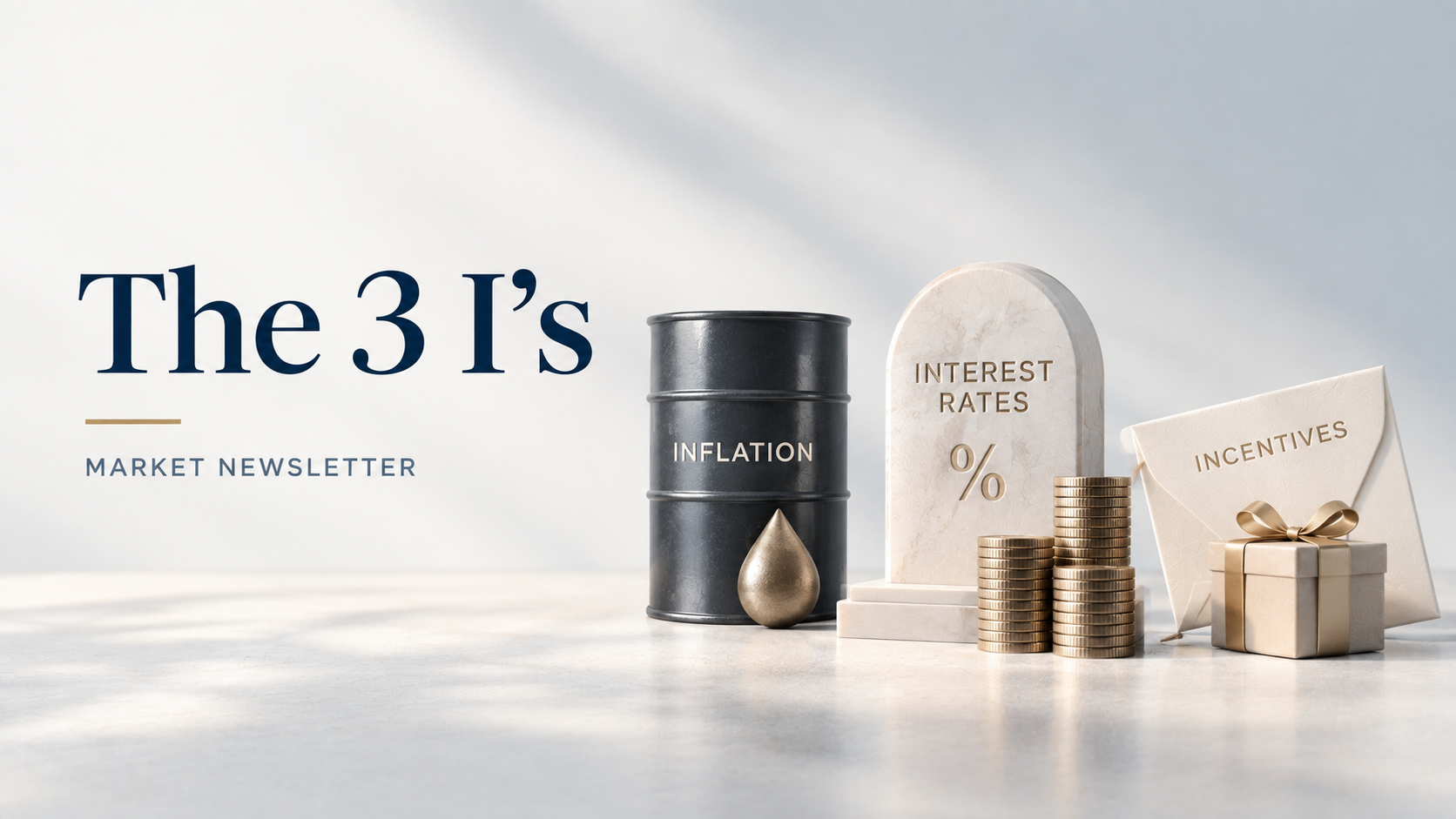
Markets spent the week wrestling with three forces that, together, explain most of what moved portfolios: inflation, interest rates, and — in an unexpected twist — incentives. Major equity indices slipped between 1% and 2% as investors began to price in the possibility that persistently higher inflation could dent consumer confidence and spending. For internationally mobile investors watching multiple currencies and markets at once, the week was a useful reminder of how closely these three forces are linked, and why each deserves attention on its own.
Oil, Diesel and the Inflation Channel
Energy prices have been one of the defining stories of the year, and this week added another chapter. Brent crude climbed more than 8%, moving towards the $110-a-barrel mark as security concerns spread across key Middle Eastern shipping routes, including the Strait of Hormuz, the Red Sea and the Bab al-Mandeb Strait — corridors that carry a significant share of the world’s energy supply.
What matters most for the real economy, though, is often not the price of crude itself but what happens once it is refined. Diesel is a case in point. The premium of diesel over crude oil — known as the “crack spread” — widened sharply this week as the US national average diesel price broke through $6 per gallon. Diesel is easy to overlook because consumers don’t buy it directly at anything like the volume of petrol, but it underpins much of the physical economy: trucking, rail freight, agricultural machinery, construction equipment and industrial logistics all depend on it.
That matters because higher diesel costs tend to work their way into everyday prices with a lag. Moving goods, stocking shelves and running delivery networks all become more expensive, and those costs are typically passed through to consumers via groceries and delivery fees — even when the petrol price at the pump looks comparatively stable. The chart below shows just how sharply diesel has diverged from petrol in recent weeks, a pattern investors will want to watch closely as an early signal of broader inflationary pressure.

Interest Rates: The Fed Takes Centre Stage
Higher energy costs land on fixed income markets already uneasy about government borrowing and spending. Oil’s rally this week acted as an accelerant on that unease, pushing yields higher across the board as investors repriced the odds that central banks will need to keep rates elevated for longer. By the end of the week, markets had pushed the probability of a rate move at the US Federal Reserve’s meeting to above 90%.
This week’s Federal Open Market Committee meeting is likely to matter less for the headline rate decision than for what comes with it. Investors will be watching the Fed’s updated “dot plot” — the committee’s own projections for where rates are headed — and listening closely to how Chair Powell frames the energy-driven pickup in prices. The central question is whether policymakers treat this as a temporary shock that will fade, or as a more persistent risk to the inflation outlook that argues for a more cautious approach to future rate cuts. Either answer would have consequences well beyond US borders, with the Bank of England and Bank of Japan also holding policy meetings this week and likely to be watching the Fed’s tone closely.
A Political Incentive Adds a Wrinkle
Alongside the usual inflation and rates story, an unusual development entered the picture this week: a proposal from the US administration, floated ahead of the midterm elections, to make a direct payment to voters. Whatever one’s view of the politics involved, the economic point is straightforward — a fiscal measure of this kind, introduced at a moment when government borrowing costs are already rising and public debt levels are elevated, adds a further layer of uncertainty for bond markets to digest. It is a reminder that political developments, not just economic data, can move markets meaningfully in the current environment.
What to Watch This Week
Beyond the Fed decision itself, US Retail Sales will be closely watched as investors look for signs of resilience — or further slowdown — in US consumer spending, which remains a key pillar of economic growth. Housing data, jobless claims and industrial production figures should add further texture to the picture of how the broader economy is holding up under the weight of higher energy costs and interest rate uncertainty.
At NEBA Private Clients, we monitor these interconnected forces — energy, inflation and monetary policy — closely on behalf of our internationally mobile clients, whose portfolios and financial plans often span multiple currencies and jurisdictions. Understanding how a diesel price chart in the US can ripple through to interest rate expectations, and ultimately to portfolio positioning, is part of the value we aim to bring to every client conversation.
This article is based on insights and analysis provided by Craig Farley of TEAM.
