

Just when investors thought markets might pause for breath, US equities delivered another impressive week of gains.
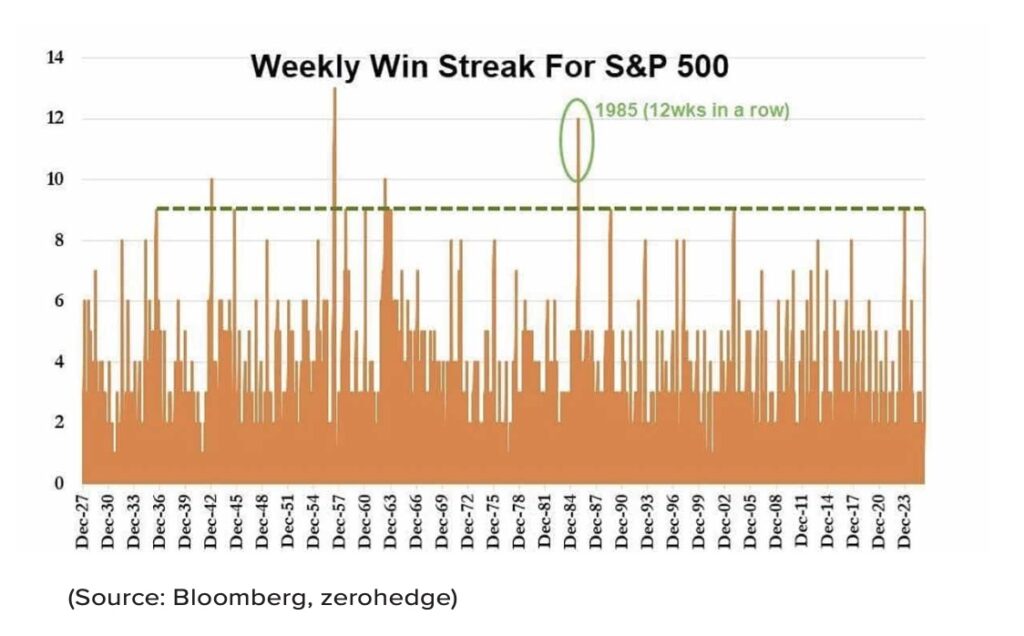
The S&P 500 recorded its ninth consecutive positive week, while the Nasdaq 100 crossed the 30,000 level for the first time in history. Despite ongoing geopolitical uncertainty and concerns around market concentration, investor sentiment remains remarkably resilient.
Much of the optimism continues to be driven by artificial intelligence, although the leadership behind the rally is beginning to evolve.
While headlines often focus on the world’s largest technology companies, recent market performance suggests investors are increasingly rewarding the businesses that make AI possible.
For much of the past two years, attention has centred on the Magnificent Seven. Today, however, the spotlight is shifting toward the infrastructure layer of the AI ecosystem — semiconductor manufacturers, server providers, and companies supplying the computational power required to support rapid AI adoption.
Taiwan Semiconductor Manufacturing Company (TSMC) remains one of the clearest examples of this trend. As the primary producer of advanced chips used by companies such as Apple, Nvidia and AMD, TSMC has become a critical component of the global technology supply chain.
Last week, Dell Technologies offered another reminder of where investor attention currently lies. The company reported record financial results, including nearly $44 billion in quarterly revenue and a dramatic increase in demand for AI-optimised servers. Investors responded enthusiastically, sending the stock up 33% in a single trading session.
The enthusiasm surrounding AI is no longer limited to public markets. Private market valuations continue to surge, with Anthropic reportedly approaching a trillion-dollar valuation as demand accelerates for AI tools that improve productivity across industries.
Yet not everything beneath the surface is as straightforward as headline index levels might suggest.
Several of the S&P 500’s recent record highs have occurred alongside negative market breadth, meaning fewer stocks are participating in the rally than the index itself would imply. Some market commentators have drawn comparisons to previous periods of concentrated leadership, including the late-stage technology boom of the late 1990s.
For now, however, strong earnings growth continues to support investor confidence.
As markets look ahead to upcoming US employment data and future Federal Reserve policy decisions, one theme remains clear: artificial intelligence continues to reshape both market leadership and investor expectations.
The question is no longer whether AI will drive growth, but which companies stand to benefit most from the infrastructure required to power it.
At NEBA Private Clients, we believe periods of rapid innovation often create both opportunities and challenges for investors. While market leadership may continue to evolve, maintaining a disciplined investment approach and focusing on long-term structural trends remains essential. By staying focused on the underlying drivers of growth rather than short-term market noise, investors can be better positioned to navigate changing market conditions and build lasting wealth over time.
This article is based on insights and analysis provided by the TEAM Asset Management.
